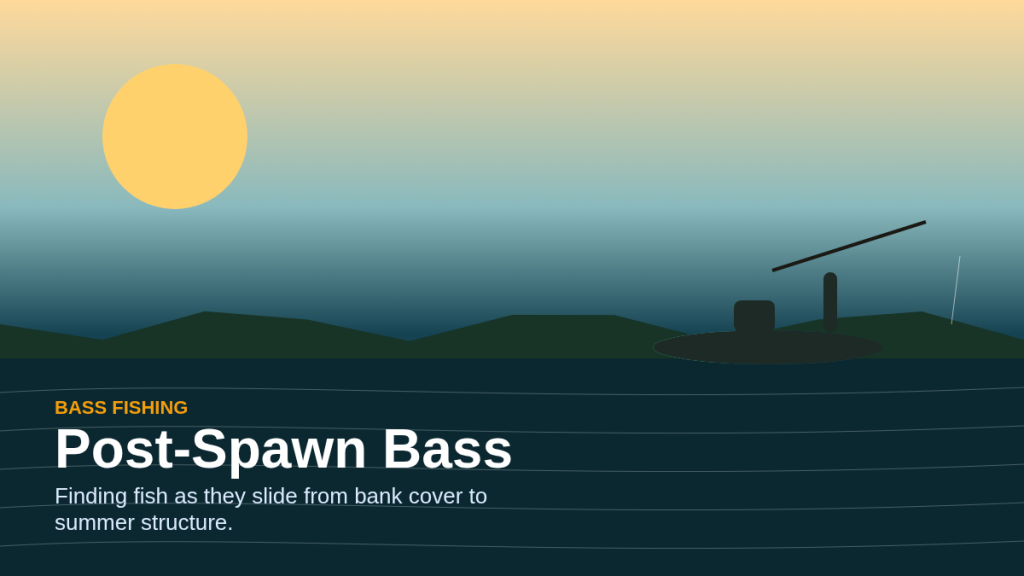
Post-spawn bass scatter to main-lake structure and offshore cover. Here is how to relocate them when shallow patterns slow down.
Post-spawn bass do not vanish. They relocate. Use this practical early-summer plan to follow fish from bank cover to the first dependable summer structure.
Early summer is one of the easiest windows to overthink. The spawn is mostly over, the bank bite gets inconsistent, and bass start spreading across several zones at once. The key is not guessing a magic lure. The key is following the fish through their transition.
Start Where Spawning Fish Recover
After the spawn, many bass spend a short period close to the same pockets, flats, and protected banks where they finished spawning. They may not be locked on beds anymore, but they often stay close to bluegill beds, shade, docks, grass edges, laydowns, and the first available ambush cover.
Fish these areas quickly first. If you get short strikes, followers, or only small fish, that is a sign the better fish may already be sliding away from the bank.
Follow the First Break
The first reliable depth change outside a spawning area is often the highest-percentage next stop. That might be a creek-channel swing, a grass edge, a roadbed, a tapering point, or the outside edge of a flat. You are looking for a route bass can use to move from shallow feeding areas toward cooler, more stable water.
Use Electronics Without Getting Stuck on the Screen
Side imaging, down imaging, and mapping help most when you use them to find structure, bait, and hard-bottom changes. Idle until you see something worth fishing, then put the trolling motor down and make multiple casts from different angles. Do not spend the entire morning idling past catchable fish.
Best Bait Categories for the Transition
- Topwater: early, late, and around bluegill beds.
- Swim jig or bladed jig: grass edges, shallow cover, and stained water.
- Texas rig: docks, wood, grass holes, and pressured fish.
- Deep crankbait or football jig: points, ledges, and hard-bottom breaks.
- Drop shot or shaky head: clean-up presentations when fish are visible but reluctant.
A Simple Morning Game Plan
- Fish shallow shade and bluegill activity for the first hour.
- Check the first break outside the best spawning pockets.
- Idle nearby points and channel swings for bait and cover.
- Return shallow only if wind, clouds, or feeding activity improves.
The post-spawn period rewards anglers who move with the fish. Start shallow, verify the transition zone, and let structure plus bait tell you when it is time to back out.
Budget post-spawn tackle
Simple moving baits and plastics for the first depth changes after the spawn.
YUM Dinger Soft Stick Baits
Price:Under $8
Versatile stick worms for wacky rigs, Texas rigs, and weightless presentations in most lake colors.
- Proven bass bait
- Multiple colors
- High value per pack
Booyah Pond Magic Spinnerbait
Price:Under $8
Compact spinnerbait sized for ponds, kayaks, and stained water—good for wind and shallow cover.
- Small profile
- Bright blade options
- Budget-friendly moving bait
Rapala Original Floater Crankbait
Price:Under $12
Shallow-diving balsa crankbait for riprap, points, and early-season bass in natural shad colors.
- Classic action
- Shallow run
- Easy for beginners to fish
As an Amazon Associate we earn from qualifying purchases.
Keep building your early-summer bass pattern
Use these related Anglers Hub guides to keep building the same skill set:
Editor Note
Gear mentions and recommendations are independently evaluated from specifications, public product information, pricing, use-case fit, and upgrade paths unless a specific article states direct product experience.
More From The Hub
Best Early Fall Bass Lures: What to Throw as the Water Cools
Choose early fall bass lures by water clarity, wind, cover, bait depth, and fish activity with a practical seven-lure decision system.
Read More
Fall Bass Fishing Transition: How to Find Bass in September
A practical September search plan for following bait, connecting summer areas to fall feeding zones, and adjusting to wind, fronts, and turnover.
Read More
Early Summer Bass Fishing: 7 Proven Tips for More Bites
Catch more bass in early summer with seven practical tips for timing, locations, lure choices, shade, bluegill beds, and deeper midday patterns.
Read More