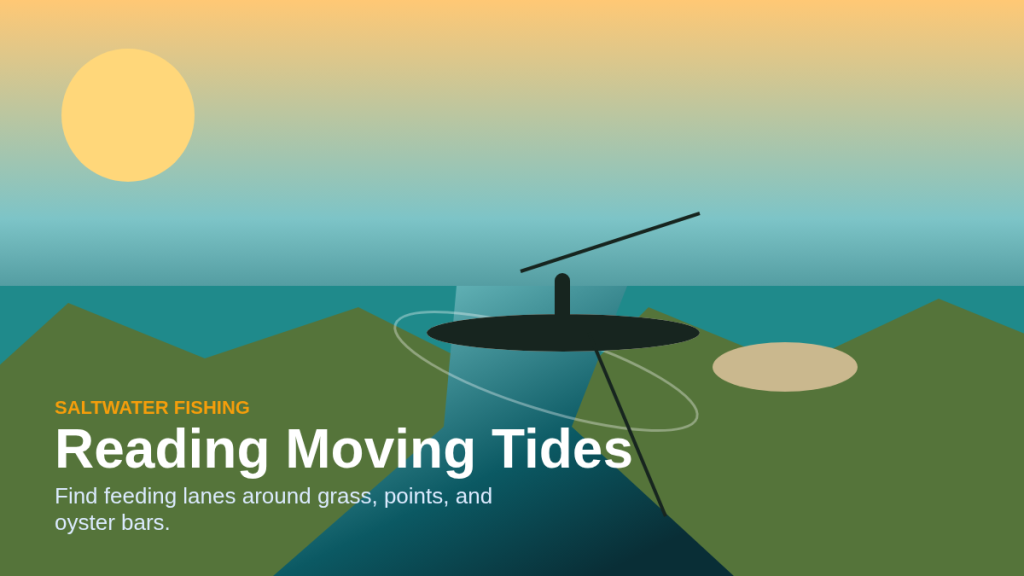
Tide stages, current seams, grass points, oyster bars, and drains, explained in the way they show up on the water.
Quick answer: This guide explains reading tides for inshore fishing in practical terms, including the key choices, common mistakes, and on-the-water details anglers should understand before the next trip.
Moving water positions bait and predators. Learn how to read tide stages, current seams, grass points, oyster bars, and drains for better inshore fishing.
Inshore fishing is controlled by moving water. Tide changes position bait, create feeding lanes, expose structure, and concentrate fish in predictable places. You do not need to memorize every tide chart detail to improve. Start by learning what each stage does to the spots you already fish.
Why Moving Water Matters
Current gives predators an advantage. Redfish, trout, snook, flounder, and other inshore species often hold where food is pushed past them. A perfect-looking flat with no current can be dead, while a small drain with moving water can reload throughout the day.
Incoming Tide
An incoming tide floods grass edges, mangroves, oyster bars, and shallow flats. Bait moves into newly covered water, and fish often push in behind it. Focus on entry routes: cuts, creek mouths, grass points, and edges that give fish quick access to both shallow food and deeper escape water.
Outgoing Tide
An outgoing tide pulls shrimp, crabs, minnows, and small baitfish out of cover. Drains, creek mouths, cuts, and points can become high-percentage ambush spots. Position your cast so the lure moves naturally with the current instead of fighting directly against it.
Slack Tide
Slack water is often slower because bait is not being moved. It is not impossible to catch fish, but you may need to downsize, fish shade, target deeper potholes, or move until the water starts pushing again.
Best Tide Features to Watch
- Current seams: edges where fast and slow water meet.
- Oyster bars: structure, bait, and current breaks in one place.
- Grass points: ambush corners during moving water.
- Drains: natural funnels on an outgoing tide.
- Color changes: signs of depth change, current, or stirred bait.
Simple Tide Plan
- Pick two or three spots close together.
- Fish each spot on both incoming and outgoing water over several trips.
- Note where bait appears and where strikes happen.
- Return during the same tide stage when conditions match.
Tides make inshore fishing more predictable. Learn how water moves through your local areas, then let current tell you where bait and feeding fish should set up.
Budget inshore saltwater tackle
Float rigs and paddle-tail jigs that match tide seams and grass edges on a modest budget.
Weighted Popping Cork Rig
Price:Under $10
Basic popping cork setup for inshore redfish, trout, and marsh edges under a float.
- Easy depth control
- Visible strike indicator
- Standard inshore rig
Inshore Paddle Tail Jig Kit
Price:Under $12
Paddle-tail jigs for redfish, speckled trout, and grass-line presentations.
- Versatile saltwater profile
- Works under corks or solo
- Budget-friendly pack
Seaguar Red Label Fluorocarbon
Price:Under $12
Short leader spool for tying off braid or mono when you want less visibility subsurface.
- Low visibility
- Abrasion resistant
- Standard leader material
Booms Fishing Aluminum Pliers
Price:Under $15
Lightweight aluminum pliers with spring jaws and a built-in line cutter—enough for most bank and kayak trips.
- Spring-loaded grip
- Integrated cutter
- Low cost backup pair
As an Amazon Associate we earn from qualifying purchases.
Related inshore saltwater guides
Use these related Anglers Hub guides to keep building the same skill set:
Editor Note
Gear mentions and recommendations are independently evaluated from specifications, public product information, pricing, use-case fit, and upgrade paths unless a specific article states direct product experience.
More From The Hub
How to Read Side Imaging for Bass
Learn how returns, acoustic shadows, range, frequency, speed, and transducer setup affect what bass, baitfish, brush, rock, and grass look like.
Read More
Fall Bass Fishing Transition: How to Find Bass in September
A practical September search plan for following bait, connecting summer areas to fall feeding zones, and adjusting to wind, fronts, and turnover.
Read More
Early Summer Bass Fishing: 7 Proven Tips for More Bites
Catch more bass in early summer with seven practical tips for timing, locations, lure choices, shade, bluegill beds, and deeper midday patterns.
Read More