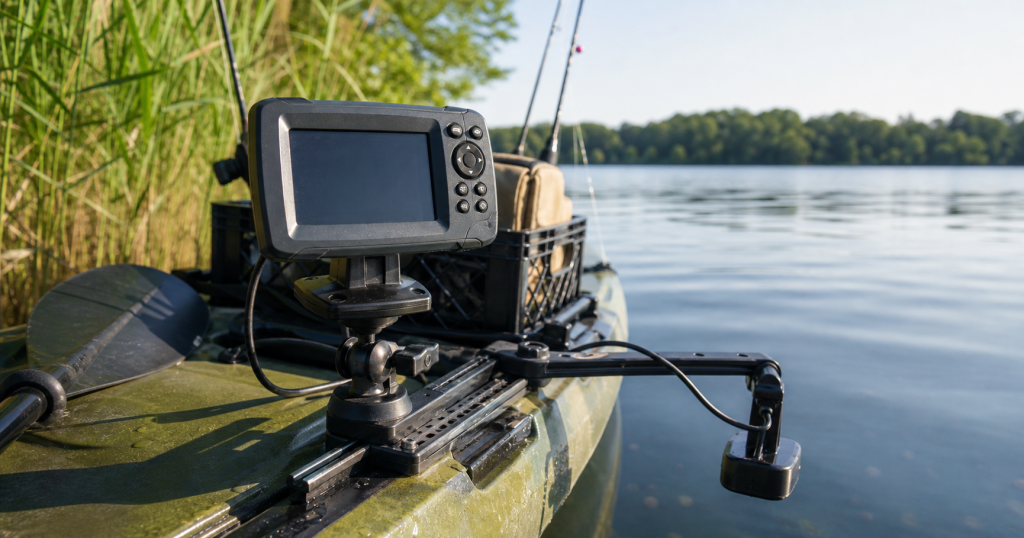
Compare kayak fish finders by screen size, power draw, mounting, transducer fit, GPS, and value.
Quick answer: This guide explains best kayak fish finders in practical terms, including the key choices, common mistakes, and on-the-water details anglers should understand before the next trip.
Affiliate disclosure: This article contains affiliate links. If you buy through these links, The Anglers Hub may earn a commission at no extra cost to you. Our recommendations are research-based and built from manufacturer specifications, public product information, feature comparisons, pricing/value, installation requirements, upgrade paths, and use-case fit for bass, kayak, and beginner anglers.
Kayak fish finders have different priorities than bass boat electronics. A good kayak unit needs a readable screen, modest power draw, clean transducer mounting, and controls you can reach from a seated position. A giant premium graph can be a poor kayak choice if it drains the battery or crowds the cockpit.
Best Overall Kayak Value
Garmin STRIKER Vivid 7sv
Value
Best for kayak anglers who want a larger screen, GPS marking, and useful sonar views without premium mapping cost.
See Current PriceBest Compact Kayak Pick
Garmin STRIKER Vivid 5cv
Budget/value
Best for anglers who want a smaller screen and simpler power/mounting demands.
See Current PriceEvaluation Methodology
We compared fish finders by screen size, sonar type, mapping support, transducer requirements, installation complexity, power draw, networking and upgrade path, pricing, and suitability for bass fishing, kayak fishing, and beginner anglers. Product recommendations are based on specifications, public product information, feature tradeoffs, and use-case fit rather than undisclosed personal product use.
For kayaks, we weighted screen size against power draw, rail-mount practicality, transducer arm/scupper fit, GPS usefulness, and whether the display is readable without taking over the cockpit.
| Model | Best For | Kayak Strength | Skip If |
|---|---|---|---|
| nGarmin STRIKER Vivid 7sv | Feature/value balance | Large readable screen | You need premium maps |
| Garmin STRIKER Vivid 5cv | Compact setups | Lower draw and smaller mount | You want side imaging |
| Garmin STRIKER Vivid 4cv | Tight budgets | Tiny footprint | Screen size matters |
| Lowrance Hook Reveal 7 | Budget imaging kayaks | Side/down scan options | You need compact power simplicity |
Scroll horizontally on small screens to view all columns.
Buying Advice For Kayaks
Start with mounting and battery before features. A fish finder is only useful if the transducer stays below the waterline and the screen is visible while paddling or pedaling. Rail mounts, arm mounts, and scupper setups all change which transducer bundle makes sense.
Who Should Skip A Large Kayak Graph?
Skip seven-inch units if your kayak has limited cockpit space, if you carry minimal batteries, or if you fish short pond trips where depth and temperature are enough. The under $300 guide may be more practical.
Upgrade Path
Many kayak anglers eventually upgrade from a small CHIRP unit to a larger display, better battery, or side imaging. Buy mounts and wiring that can be reused when possible.
Garmin STRIKER Vivid 7sv
Value
Best for kayak anglers who want readable screen size and useful GPS marking.
Pros
- Seven-inch display
- Kayak-friendly value
- GPS waypoint marking
Cons
- Limited premium mapping
- Larger than some kayaks need
- Not a flagship networking platform
Garmin STRIKER Vivid 5cv
Budget/value
Best for compact kayak setups where a seven-inch screen feels too large.
Pros
- Smaller footprint
- Lower setup burden
- Good beginner fit
Cons
- Less screen space
- No side-imaging focus
- Limited mapping
For setup details, read fish finder installation and transducer placement. For larger boat choices, see the bass fish finder guide.
Author Credibility
The Anglers Hub evaluates fishing electronics from a practical angler perspective: what the specs mean on a bass boat, kayak, jon boat, or beginner setup; what features matter for different water types; and where upgrade paths can save money later. We do not claim personal ownership or personal product use of a product unless that information is clearly stated in the article.
Kayak Fish Finder FAQ
What size fish finder is best for a kayak?
Five inches is compact and easy to power; seven inches is easier to read but takes more cockpit space.
Do kayak fish finders need GPS?
GPS is helpful for marking brush, creek channels, launch routes, and productive drifts.
Where should the transducer go on a kayak?
Use a scupper, hull-ready mount, or arm mount that keeps the transducer in clean water and protected during launches.
Budget kayak rigging add-ons
Power and mounting basics that matter as much as the graph itself on a kayak.
Attwood Battery Box Small
Price:Under $25
Basic 12V battery box for fish finders and small electronics on jon boats and kayaks.
- Secure hold-down
- Ventilated design
- Common size for group 27 batteries
Transom Mount Transducer Bracket
Price:Under $20
Adjustable transducer bracket for small boats and jon boats when you need clean sonar water.
- Easy install
- Works with common transducers
- Budget rigging fix
Kayak Paddle Leash
Price:Under $15
Coiled leash that keeps your paddle attached when you land fish or swap rods on a kayak.
- Prevents paddle drift
- Simple install
- Standard kayak safety item
SanDisk Ultra microSD 32GB
Price:Under $12
Map and waypoint storage for Garmin, Humminbird, and Lowrance units that use microSD cards.
- Widely compatible
- Enough space for regional maps
- Inexpensive spare card
As an Amazon Associate we earn from qualifying purchases.
Kayak fishing setup guides
Use these related Anglers Hub guides to keep building the same skill set:
Before choosing battery capacity, calculate the whole system with the kayak fish finder battery runtime and wiring guide. It covers usable capacity, fusing, wire, connectors, and trip reserve.
Editor Note
Gear mentions and recommendations are independently evaluated from specifications, public product information, pricing, use-case fit, and upgrade paths unless a specific article states direct product experience.

More From The Hub
Kayak Fish Finder Battery Runtime and Wiring Guide
Estimate fish finder battery runtime and build a safer kayak electronics circuit with correct voltage, usable capacity, fusing, wire, and connectors.
Read More
How to Read Side Imaging for Bass
Learn how returns, acoustic shadows, range, frequency, speed, and transducer setup affect what bass, baitfish, brush, rock, and grass look like.
Read More
Best Early Fall Bass Lures: What to Throw as the Water Cools
Choose early fall bass lures by water clarity, wind, cover, bait depth, and fish activity with a practical seven-lure decision system.
Read More